Saturday, April 04, 2015

Nicaraguan Farmers Unite to Fight the Canal

Nehemiah Stark
 Farmers in La Uniòn gather near a bullpen with graffiti that says: ‘No To The Canal’. Photograph: Nehemiah Stark
La Uniòn is a 2,000-person farming community in Nicaragua. It is slated, along with other communities, to be sacrificed to industrial progress at the hands of the Hong Kong-funded Grand Canal, the largest construction project in the history of the world.
Some of the farmers living there fought against President Daniel Ortega in the war that tore through Nicaragua in the 1980s. During that war, Ortega called himself a fighter “against the domination [by] the capitalists of our country”.
I went to La Uniòn to hear the stories of these farmers, and to photograph a community on the edge of disappearance. People were willing to unite with Sandinista farmers, their former enemies, in the struggle against the Canal. This struggle pits Ortega’s government, the canal’s profiteers, and most of the urban population against the farmers.
Leonardo Escobar Escamoro
Pinterest
 ‘We can barely survive here’, says Leonardo Escobar Escamoro. Nicaragua is the second poorest country in the western hemisphere, and corporate monopolization of farmland has crushed small farmers. Half of the countryside lives on less than a dollar a day. Photograph: nehemiak stark
Isabel Día Talavera
Pinterest
 Isabel Día Talavera: ‘It is not fair to go to a different place that you do not know, or how you are going to live.’ Her husband Miguel shakes his head: ‘We are not acting against the government. He [Ortega] is acting against his own people.’
Miguel Antonio Lopez Alvarez
Pinterest
 Miguel Antonio Lopez Alvarez: ‘We feel failed…they could evacuate us or send the army to hurt or kill us at any moment.’
alavres granddaughters
Pinterest
 Two of Alvarez’s granddaughters. Without consultation with the public, the canal concession was ratified in three days.
Serapio Telles
Pinterest
 Serapio Telles shares his frustration at the lack of countrywide solidarity: ‘We farmers are the only ones who have been unified and rise against the project.’ Advocacy lawyer Mónica López Baltodano says that because the government is so tied to the media and private sector: ‘People are afraid to oppose this because they could lose their jobs.’
Lake Nicaragua
Pinterest
 Lake Nicaragua is the largest source of potable fresh water in Central America. Among major environmental concerns posed by the project are pollution, deforestation and huge water consumption. Scientific American reported that Ortega’s government did not solicit any environmental impact studies. Jorge Huete-Pèrez’s, vice-president of Nicaragua’s Academy of Science, wrote in his editorial in Science magazine: ‘Something is clear, which is the interest in building the canal without interest in the consequences.’
wife
Pinterest
 A farmer’s wife in a kitchen. Bismarck Alvarado, a Sandinista farmer: ‘It is important to join them [the Contras] because...this affects us equally, regardless of our politics.’
José Inez Gonzalez Ojela
Pinterest
 When José Inez Gonzalez Ojela was 16, in 1981, he took up arms against the Sandinistas and lost his younger brother in the war. José’s friend and local activist leader Don Celestino said: ‘There are Sandinistas who do not believe in the intentions of this dictatorial government. We have come together.’
horse rider
Pinterest
 A farmer on a horse. Ortega’s Nicaragua is ranked eighth in the world for non-intervention in the private sector.
Jaime Obando
Pinterest
 Jaime Obando: ‘[Canal Spokesman] Telèmaco Talavera said in his speech that they are going to pay us good prices [for our land].’ The concession requires the government to only pay the state-assessed (cadastral) values, widely known to be far lower than market prices.
Bullets
Pinterest
 Bullets from the Contra War remain on a hill where Miguel Antonio Lopez Alvarez’s house now stands - they were inserted into a tangerine to symbolize the farmers’ new struggle. Jaime Obando remarked: ‘All of our communities are [of] the same voice. We might go to war, not because we all want that, but because there is may be no other option. We need a place to live.’

Monday, March 30, 2015

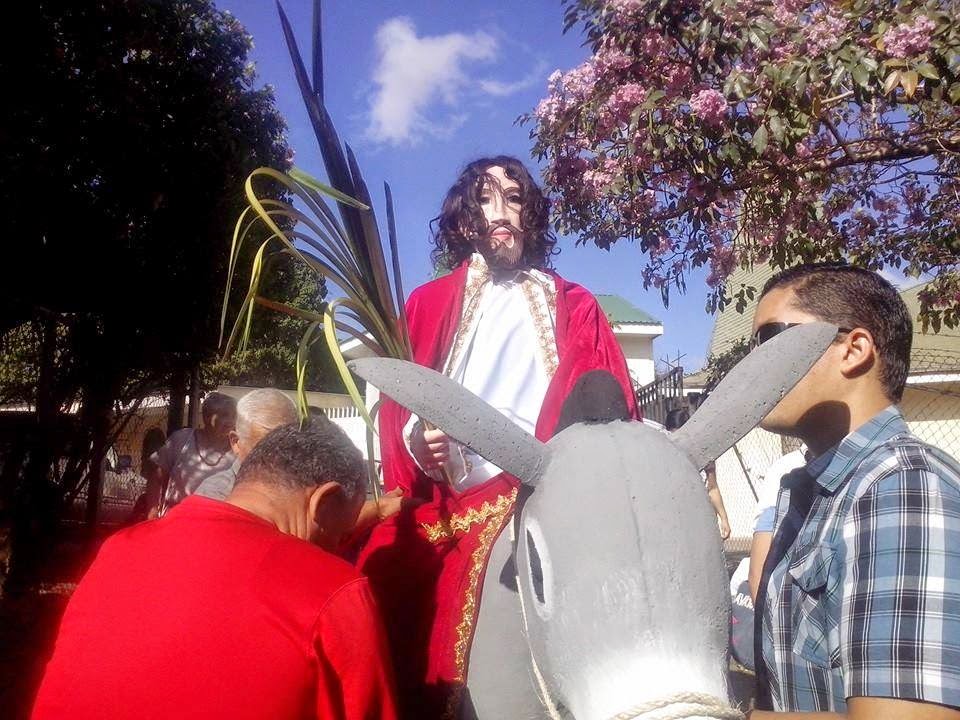
Sol’s Cousin Helps with the Palm Sunday Procession in Managua


Layla María Sacasa Cuadra:
 Mi hijo Josernesto (Toto) asegurando la imagen de Jesús del Triunfo antes de la bendición de palmas y procesión.


Saturday, March 28, 2015

Compleaño de Argentina

Layla wrote:

Feliz cumpleaños a mi hermana amada, nuestra guerrera incondicional, mi compañera de vida. Mi admirable ejemplo: María Argentina Sacasa Cuadra. ¡El Dios todoamoroso te sostiene y te guarda como servidora fiel en los más despreciados de la sociedad: los ancianos enfermos! Te amamos.

Sunday, March 01, 2015

Thursday, January 22, 2015

Mamá y papá.José Daniel del Tránsito Sacasa Brown y Julia Elia de la Concepción Cuadra Robleto.
Sol's great grandparents.

Friday, January 09, 2015

Busking in Balboa Park

Sol Maria was sometimes a busker in Balboa Park like this young woman.

Monday, December 15, 2014

Sunday, December 14, 2014

Ezra Sings at Christmas Pageant at Saint Catherine's Church in Harlem

The congregation includes many from Central America and also Haiti.


Wednesday, December 03, 2014

Meeting in La Jolla

This was taken possibly at the Che Cafe in La Jolla. Me and Sol and Cynthia Lopez. I can't remember who the person behind Sol is-- perhaps Greg Landau's daughter Nicole(?) from Nicaragua?

Cynthia is now the Film Czar of New York City--She was appointed by Mayor DeBlazio to head the New York City Film Office.  Any production made in the city has to get permission (and strict guidelines) from her office. Cynthia worked at the Centro for Puerto Rican Studies and then at Deep Dish TV as program director and for a while as acting director.

I have no idea what we are eating. Perhaps peas from Ezra's garden?

Tuesday, November 11, 2014

Sol's Nicaraguan Relatives

 Here are some pictures from Sol Maria's aunt Layla's Facebook page.

Unfortunately Sol hasn't spoken to that part of the family for almost ten years.

We all miss her!
 — withHilds Margarita Sacasa.


Sunday, September 07, 2014

The Literacy Campaign


Sol's mother Kenia was one of the youth who worked with the literacy campaign in Nicaragua. When the Sandinistas came to power in 1979, they initiated a program to send teachers to the rural areas. Within five months the illiteracy rate in Nicaragua dropped from 50% to 12%. This is a trailer from a film about the Cuban literacy campaign.